




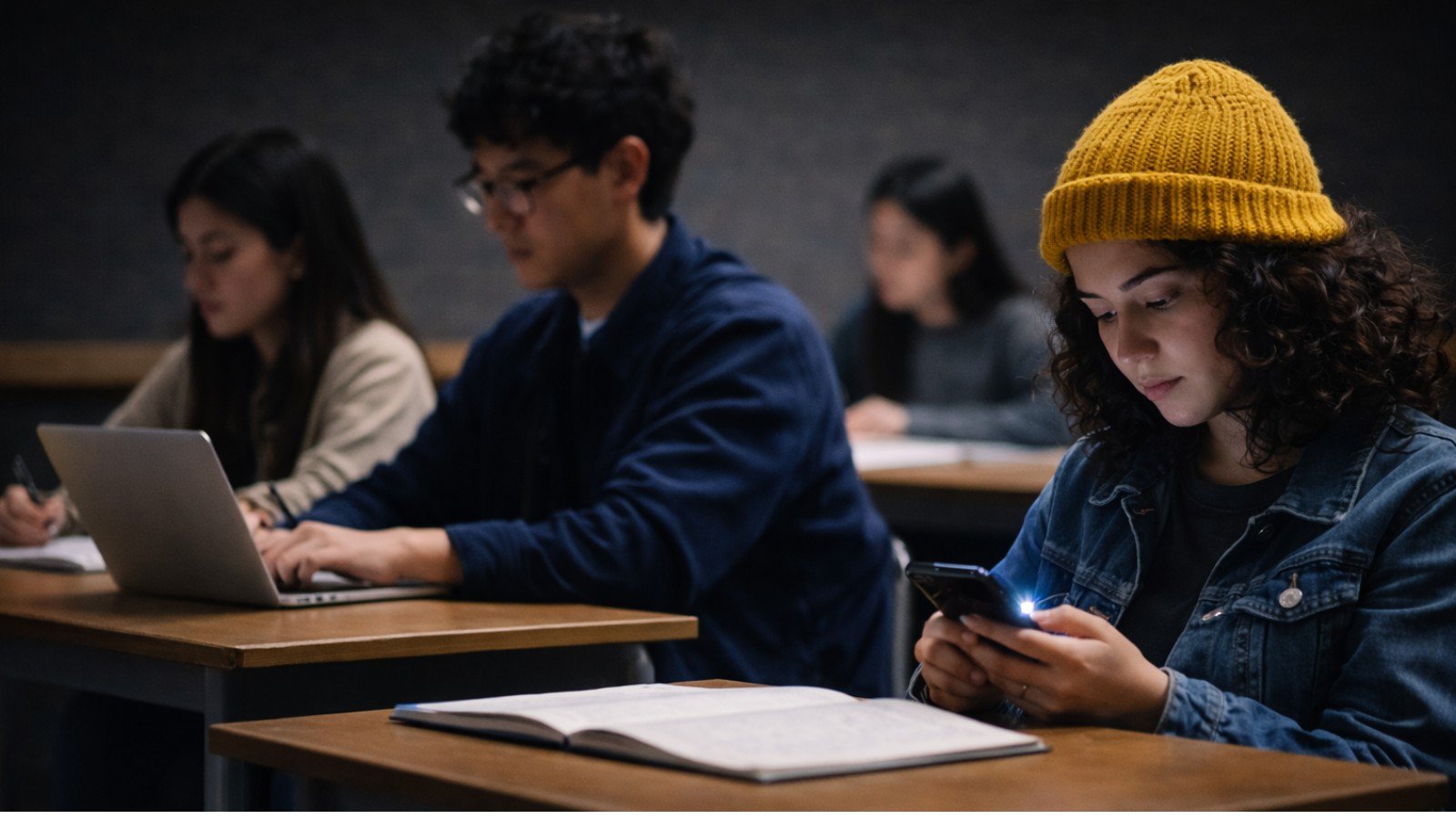
Gen Z is once again at the centre of an online firestorm — this time over education, focus, and what growing up with smartphones really changed. Viral posts comparing Gen Z to millennials are flooding Facebook and X, triggering backlash, memes, and comment wars that refuse to die down.
Thank you for reading this post, don't forget to subscribe!This debate echoes a broader nostalgia wave already reshaping internet culture — the same one where Gen Z has started rebranding recent history as “vintage.”
Table of Contents
Why This Claim Is Blowing Up on Facebook
The spark came from highly shareable posts framing Gen Z as the first “digital-only” generation — raised on smartphones, social media, and constant notifications. Screenshots, headlines, and bold captions spread fast, designed to provoke reactions rather than careful discussion.
Comment sections quickly turned into battlegrounds, with thousands of replies debating whether technology has helped or harmed learning.
What Studies Actually Say (And What They Don’t)
Research around education outcomes is mixed and often nuanced. Some studies point to declining attention spans and increased distraction in classrooms, while others highlight new forms of digital literacy, adaptability, and problem-solving skills that didn’t exist a decade ago.
What most experts agree on is that broad generational labels oversimplify a far more complex picture shaped by policy, technology access, and changing teaching methods.
According to research published by the American Psychological Association, attention and cognitive performance are influenced by multiple environmental factors — not just generational differences. Similarly, data from Pew Research Center suggests that digital exposure shapes behavior patterns, but does not directly determine intelligence levels.
Millennials vs Gen Z: Two Very Different School Worlds
Millennials largely grew up during the transition into the internet age — computer labs, early social media, and limited screen time. Gen Z entered classrooms already surrounded by smartphones, on-demand content, and algorithm-driven platforms.
The result isn’t necessarily “worse” or “better” education, but a radically different experience that fuels misunderstandings between the two generations.
Is This Really About Intelligence — Or Technology?
Many critics argue the debate isn’t about intelligence at all, but about how constant connectivity reshapes focus, memory, and motivation. Supporters counter that Gen Z has simply adapted to a faster, more complex information environment — one that rewards different skills than traditional schooling.
Either way, the argument reveals more about cultural anxiety than clear academic decline.
What Older Generations Are Saying
Millennials pushing back on this narrative argue that every generation faces criticism from the one before it. They point out that when millennials were teenagers, they were blamed for “killing” industries, being too online, and lacking attention spans — accusations that now sound familiar.
Many argue that technology itself isn’t the problem — how it’s used is. Smartphones, they say, are tools. The real issue may lie in how schools, parents, and platforms adapted (or failed to adapt) to a digital-first reality.
Some teachers have even joined the conversation, noting that classroom dynamics have changed dramatically in the past decade. Attention spans feel shorter. Multitasking feels constant. But so does access to information, creativity, and collaboration.
In other words, the debate may be more complicated than a simple Gen Z vs millennials showdown.
Why This Debate Won’t Die Anytime Soon
Social media thrives on comparison. It amplifies conflict. A viral post questioning Gen Z’s intelligence or work ethic can rack up thousands of comments in hours — and those comments quickly turn into generational battlegrounds.
Memes fuel it. Reaction videos amplify it. Algorithm-driven feeds keep resurfacing it.
And because identity is involved — how we grew up, what shaped us, what we value — the conversation becomes personal very quickly.
That’s why this isn’t just another passing trend. It taps into something deeper: how we define progress, intelligence, and success in a world that changed faster than any generation was prepared for.
Conclusion
The Gen Z vs millennials education debate isn’t slowing down anytime soon. As nostalgia reshapes how the internet views the past, arguments about learning, attention, and technology have become a proxy war for deeper generational tensions. Whether this moment leads to better understanding — or just louder comment sections — remains to be seen.