



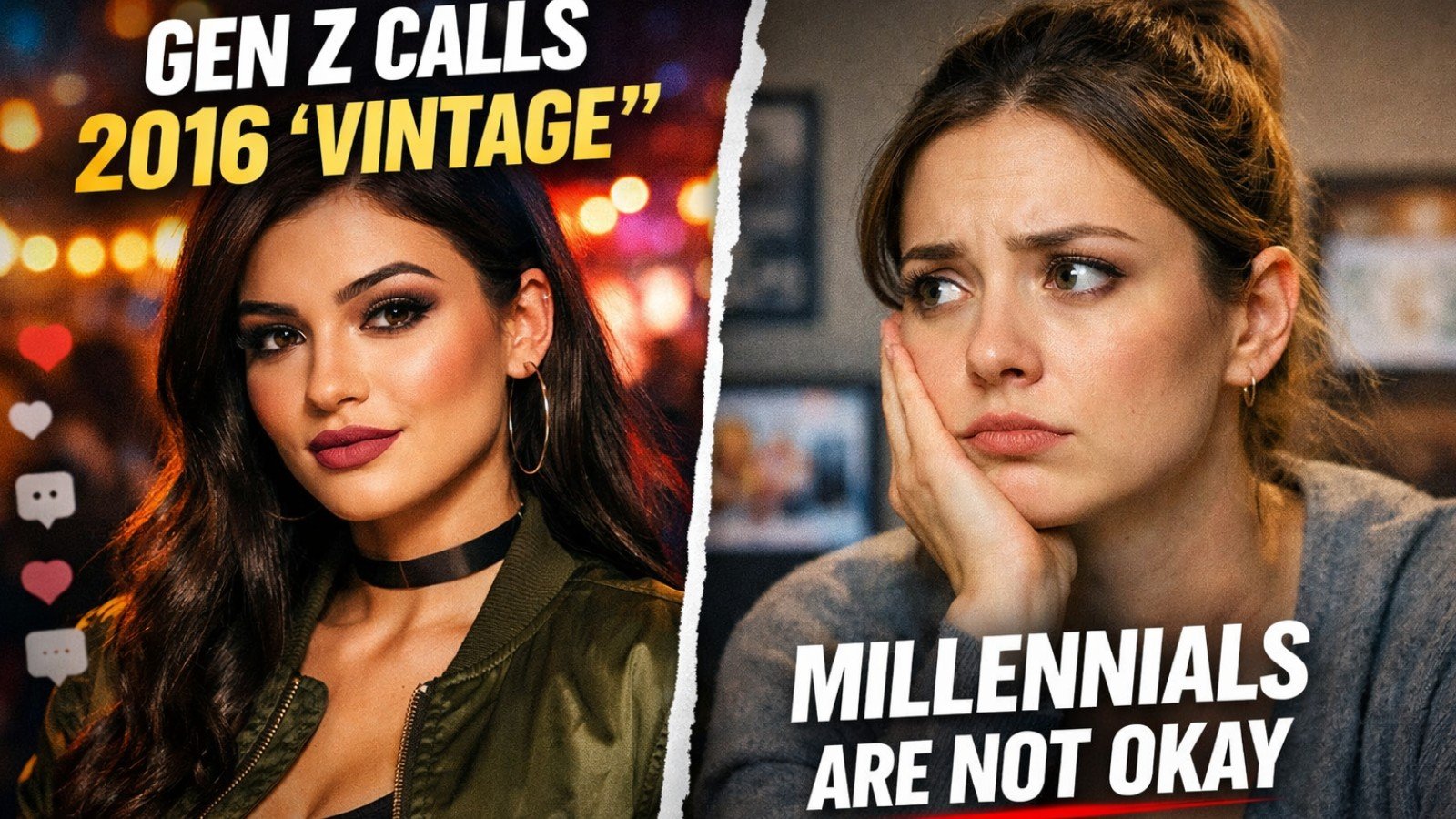
2016 nostalgia is officially back, and the internet is not handling it well. What millennials still consider “recent memories” are now being labeled “vintage” by Gen Z, triggering a full-blown cultural meltdown across TikTok, Instagram, and X.
The year that gave us heavy brows, matte liquid lipstick, bomber jackets, chokers, and sad-boy pop playlists is suddenly being treated like ancient history. And yes—people are upset.
Table of Contents
2016 Nostalgia Is Fueling a New Internet War
There is something uniquely painful about watching teenagers romanticize a time you clearly remember living through with anxiety, bad eyeliner, and questionable fashion choices.
Gen Z creators are posting “throwback” videos to 2016—sometimes filmed by people who were literally eight or nine years old at the time. They’re calling the era iconic, raw, and authentic. Millennials, meanwhile, are flooding comment sections with disbelief.
The phrase “2016 nostalgia” is now everywhere. Hashtags celebrating the era have surged, with users recreating makeup routines and outfits that many people thought were permanently retired.
The emotional divide is obvious:
- Gen Z sees a cool aesthetic.
- Millennials see unfinished trauma.
Why 2016 Feels So Different in 2026
Unlike traditional nostalgia cycles that revisit decades-long gaps, 2016 nostalgia hits differently because it doesn’t feel old.
For many millennials, 2016 represents a chaotic cultural moment:
- Social media felt less corporate.
- Influencer culture was just forming.
- Trends moved fast but still felt personal.
- The internet felt messier—and more fun.
Gen Z, raised in an era of polished feeds and algorithmic pressure, sees 2016 as a more “real” version of online life. That contrast alone explains why this revival has gained so much traction.
What one generation wants to forget, another wants to reclaim.
The Return of Heavy Makeup and “Questionable” Fashion
Perhaps the most shocking part of the 2016 nostalgia wave is the unapologetic return of beauty trends many swore they’d never repeat.
We’re seeing:
- Thick, blocky eyebrows making a comeback
- Matte liquid lipstick reappearing in tutorials
- Bomber jackets and chokers styled as “retro”
- Full glam looks being reframed as bold self-expression
What was once mocked as “overdone” is now being celebrated as fearless. The same looks that inspired memes in 2020 are now being recreated with pride in 2026.
Fashion publications have also noted a renewed interest in bold 2010s beauty aesthetics as nostalgia-driven trends resurface.
Millennials vs Gen Z: The Comment Section Battlefield
No trend thrives without conflict, and 2016 nostalgia has created one of the most entertaining generational battles in years.
Millennials are reacting with:
- Shock at being labeled “old”
- Jokes about emotional damage
- Confessions that they still do their makeup this way
Gen Z responses range from playful to defensive:
- Claims that 2016 was peak internet culture
- Arguments that modern trends feel soulless
- A belief that everything now is too minimal and curated
This clash has turned comment sections into goldmines for engagement, keeping the trend alive longer than most viral moments.
Why This Nostalgia Trend Is Spreading So Fast
2016 nostalgia works because it combines multiple viral ingredients:
- Visual transformation content (then vs now)
- Generational identity debates
- Low-risk humor with high emotional payoff
- Easily recreated looks and sounds
It’s also extremely shareable. Facebook and WhatsApp users are rediscovering old screenshots, while TikTok thrives on recreations. Every platform gets a version of the same cultural joke.
And unlike darker drama trends, this one feels safe, funny, and oddly comforting.
Is This Just a Phase—or a Sign of Something Bigger?
Nostalgia cycles usually reflect dissatisfaction with the present. The sudden love for 2016 suggests a broader cultural mood: people miss when the internet felt chaotic, expressive, and less controlled.
Whether the makeup sticks around or fades again, the emotional response tells a deeper story about how fast digital culture moves—and how quickly yesterday becomes history.
Conclusion
2016 nostalgia isn’t just about makeup or fashion. It’s about identity, memory, and how generations process the past differently. As Gen Z celebrates the era and millennials struggle to accept it, one thing is clear: the internet has officially decided that 2016 is history.
And no one was ready for that.
This is the first in our ongoing Nostalgia series exploring how internet culture redefines the past.







1 Comment